
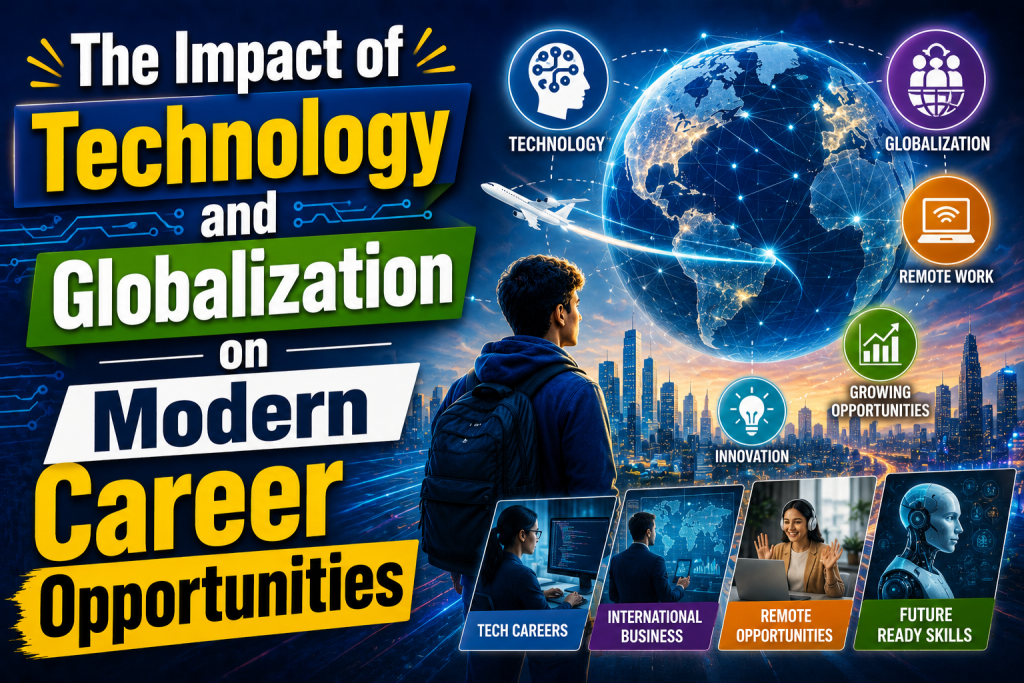

The rapid rise of technology and globalization has fundamentally reshaped the landscape of modern career opportunities. No longer confined by geography or traditional industry boundaries, today’s professionals navigate a dynamic, interconnected job market where digital skills, remote collaboration, and cross-cultural competence are essential. This transformation has opened doors to global employment, accelerated career mobility, and created entirely new professions—while simultaneously demanding adaptability, continuous learning, and digital fluency from job seekers and employees alike.
How Technology Expands Access to Global Jobs
Advancements in communication, cloud computing, and collaboration tools have dismantled physical barriers to employment. Platforms like LinkedIn, Upwork, and Zoom allow professionals to connect with employers and clients across continents. A software developer in Nairobi can work for a tech startup in Berlin. A marketing specialist in Manila can manage campaigns for a U.S.-based brand—all without leaving home.
- Remote work has become a standard offering in many industries, especially in tech, finance, education, and customer service.
- Freelancing and gig work have surged, with platforms like Fiverr and Toptal enabling individuals to monetize niche skills globally.
- Virtual internships and online apprenticeships now provide entry points for students and early-career professionals worldwide.
These shifts mean that talent is no longer limited by location. Employers now prioritize skills and results over proximity, giving rise to a truly global workforce.
Globalization Creates New Career Pathways
Globalization has not only increased international trade and business expansion—it has also diversified career fields and created demand for specialized roles. As companies operate across borders, they require professionals who understand international markets, regulatory environments, and cultural nuances.
Emerging Roles Driven by Global Interconnectivity
- International business development managers who identify growth opportunities in foreign markets.
- Cross-cultural communication specialists who help teams collaborate across time zones and languages.
- Global supply chain analysts who optimize logistics in a world of interconnected manufacturing and distribution.
- Digital nomad consultants who assist professionals in building location-independent careers.
These roles didn’t exist a decade ago but are now in high demand due to the increasing complexity of global operations.
The Rise of Digital Skills as Career Essentials
Technology has made digital literacy a baseline requirement across nearly every profession. Whether you’re in healthcare, education, or the arts, proficiency in digital tools is no longer optional—it’s expected.
Key Digital Competencies in Demand
- Data analysis and visualization using tools like Excel, Tableau, or Power BI.
- Basic coding and automation skills, even in non-technical roles (e.g., using Python for data tasks or Zapier for workflow automation).
- Cybersecurity awareness to protect sensitive information in remote and hybrid work environments.
- AI and machine learning literacy, especially as generative AI tools like ChatGPT become integrated into daily workflows.
Professionals who invest in upskilling in these areas gain a competitive edge. For example, a teacher who learns to use AI for lesson planning or a nurse who understands electronic health record systems stands out in the job market.
Increased Competition and the Need for Differentiation
While technology and globalization have expanded opportunities, they’ve also intensified competition. With talent pools now global, standing out requires more than a degree or experience—it demands a unique value proposition.
How to Stay Competitive in a Global Job Market
- Build a personal brand through LinkedIn, a professional website, or a portfolio showcasing your work.
- Develop niche expertise in high-demand areas like sustainable tech, fintech, or digital health.
- Embrace lifelong learning through online courses, certifications, and micro-credentials from platforms like Coursera, edX, or Google Career Certificates.
- Cultivate soft skills such as emotional intelligence, adaptability, and cross-cultural communication—skills that machines can’t replicate.
For instance, a graphic designer who specializes in UX/UI for multilingual apps has a clear advantage over generalists in a saturated market.
Challenges Posed by Rapid Technological Change
Despite the benefits, the pace of technological advancement presents real challenges. Automation and artificial intelligence are transforming industries, leading to job displacement in routine-based roles such as data entry, manufacturing, and basic customer support.
Jobs at Risk and Jobs in Demand
- At risk: Repetitive tasks in clerical work, assembly lines, and telemarketing.
- In demand: Roles requiring creativity, critical thinking, and human interaction—such as software engineering, mental health counseling, and strategic planning.
However, this shift also creates opportunities. Workers can transition into emerging fields like AI ethics, robotics maintenance, or digital transformation consulting—provided they are willing to reskill.
The Role of Education and Training in Preparing Future Workers
Traditional education systems are evolving to keep pace with these changes. Universities and vocational programs are integrating technology-focused curricula, while governments and private organizations offer reskilling initiatives.
Examples of Forward-Thinking Education Models
- Micro-credentials and digital badges that validate specific skills quickly and affordably.
- Hybrid learning models combining online coursework with hands-on projects.
- Industry-academia partnerships that ensure graduates meet real-world employer needs.
Countries like Singapore and Estonia have launched national digital literacy programs to future-proof their workforces. Similarly, companies like Amazon and IBM offer internal upskilling programs to help employees transition into tech roles.
Globalization and Cultural Intelligence in the Workplace
As teams become more diverse and distributed, cultural intelligence (CQ) has become a critical career asset. Understanding cultural differences in communication styles, work ethics, and decision-making processes enhances collaboration and reduces misunderstandings.
Professionals with high CQ are better equipped to:
- Lead multicultural teams effectively.
- Negotiate international contracts with sensitivity.
- Design inclusive products and services for global audiences.
For example, a project manager working with teams in Japan, Brazil, and Germany must adapt meeting styles, feedback approaches, and timelines to respect cultural norms—something that directly impacts project success.
Opportunities for Entrepreneurs and Freelancers
Technology and globalization have lowered the barriers to entrepreneurship. With just a laptop and internet connection, individuals can launch digital products, offer consulting services, or build online businesses.
Examples of Global Micro-Enterprises
- A freelance writer in India creating content for European startups.
- A designer in Colombia selling digital templates on Etsy to customers in North America.
- A tutor in the Philippines teaching English to students in the Middle East via Zoom.
These micro-entrepreneurs benefit from low overhead costs, access to global payment systems (like PayPal and Stripe), and marketing tools such as social media and SEO. This democratization of opportunity empowers individuals from developing economies to participate in the global economy.
Key Takeaways
- Technology and globalization have expanded career opportunities beyond borders, enabling remote work, global collaboration, and new industries.
- Digital skills are now essential across all professions, and continuous learning is critical for career longevity.
- While competition has increased, differentiation through niche expertise, personal branding, and soft skills can set professionals apart.
- Automation presents challenges but also creates demand for creative, strategic, and human-centered roles.
- Education and training systems must evolve to prepare workers for a rapidly changing job market.
- Cultural intelligence and adaptability are vital for success in diverse, global teams.
- Entrepreneurs and freelancers can now build sustainable careers with minimal resources, thanks to digital platforms.
FAQ
How has remote work changed career opportunities?
Remote work has removed geographical limitations, allowing professionals to apply for jobs worldwide. It has increased flexibility, improved work-life balance, and enabled access to higher-paying roles regardless of local market conditions. However, it also demands strong self-discipline and digital communication skills.
What skills are most valuable in a globalized job market?
The most valuable skills include digital literacy, data analysis, cross-cultural communication, adaptability, and problem-solving. Additionally, proficiency in collaboration tools (like Slack or Microsoft Teams) and basic understanding of AI tools are increasingly important.
Can someone without a college degree succeed in today’s job market?
Yes. With the rise of alternative education paths—such as bootcamps, certifications, and self-directed learning—many employers now prioritize skills and experience over formal degrees. Building a strong portfolio, gaining hands-on experience, and showcasing results can open doors in tech, design, marketing, and other fields.


